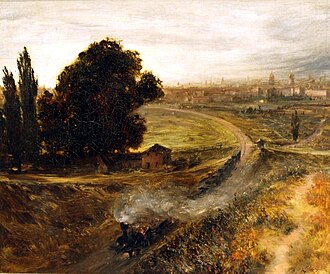
Adolph Menzel, Das Berlin-Potsdamer Eisenbahn (The Berlin-Potsdamer Railway), 1847. |
SCHUMANN AND BRAHMS SATURDAY, AUGUST 22, 2026 . 7:30 pm Mercury Orchestra The Mercury Orchestra, national winner of the 2010 American Prize in Orchestral Performance, presents two contrasting masterpieces of the romantic era. Robert Schumann’s “Spring Symphony” was his first completed symphonic work, an energetic and dynamic celebration of the joys and passions of springtime. Johannes Brahms’s second piano concerto is fully symphonic in structure and scope, traversing serious majesty, whirling tumult, serene contemplation, and playful dance. The concert will feature Kelvin Tang, winner of the 2026 Fou Ts’ong International Concerto Competition, sponsored by the Foundation for Chinese Performing Arts. |
||||
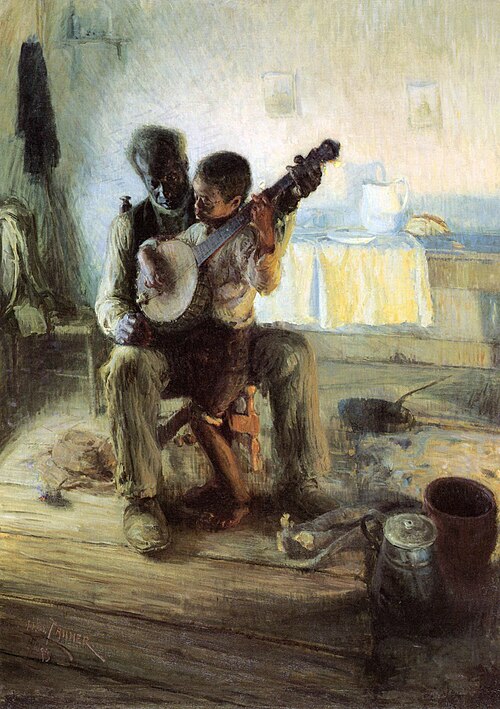
Henry Ossawa Tanner, The Banjo Lesson, 1893 |
PERRY, SCHUMAN, AND HARRIS SATURDAY, JULY 18, 2026 . 8:00 pm Mercury Orchestra With the New World Chorale JULIA PERRY A Short Piece for Large Orchestra The Mercury Orchestra, national winner of the 2010 American Prize in Orchestral Performance, examines snapshots of American history in the 250th anniversary of the Declaration of Independence, through the musical prisms of three mid-20th century American composers. African-American composer and conductor Julia Perry wrote A Short Piece for Large Orchestra, an imperious, kinetic delight. William Schuman’s secular cantata A Free Song declaims the Civil War era poetry of Walt Whitman in a reflective dialogue that expresses a desire for freedom for all mankind; this work awarded the first Pulitzer Prize for Music in 1943. Roy Harris’s stirring sixth symphony vividly brings to life the noble exhortations of Lincoln’s Gettysburg Address, to honor the ideal that all men were created equal.
|
||||
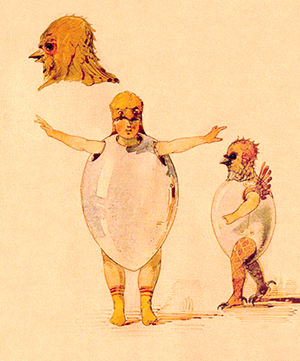
Viktor Hartmann, Sketch of canary chick costumes for the ballet Trilby, 1871. |
RAVEL AND MUSSORGSKY SATURDAY, AUGUST 23, 2025 . 7:30 pm Mercury Orchestra The Mercury Orchestra, national winner of the 2010 American Prize in Orchestral Performance, celebrates the 150th anniversary of Maurice Ravel’s birth. The concert opens with the jaunty and plaintive Alborada del gracioso (Morning Song of the Jester), from Ravel’s Miroirs, a quintet of piano tableaux. The evocative, lyrical Piano Concerto for the Left Hand was commissioned by Paul Wittgenstein, a concert pianist who had lost his right arm in World War I. The performance closes with Ravel's masterful and colorful orchestration of Mussorgsky’s Pictures at an Exhibition, originally a set of piano pieces inspired by the paintings of Viktor Hartmann. |
||||
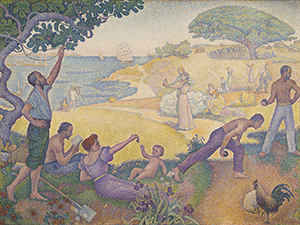
Paul Signac, Au temps d'harmonie: l’âge d’or n’est pas dans le passé, il est dans l’avenir (In the Time of Harmony. The Golden Age is not in the Past, it is in the Future) (1893-95) |
FINZI AND RESPIGHI WEDNESDAY, AUGUST 6, 2025 . 7:00 pm GERALD FINZI Intimations of Immortality, ode for tenor, chorus, and orchestra Channing Yu, conductor The Mercury Orchestra, national winner of the American Prize for Orchestral Performance, performs an outdoor concert featuring Gerald Finzi’s Intimations of Immortality, a rarely performed vocal-orchestral work based on the poem by William Wordsworth. It is a moving portrait of the loss of the wonder we have as children and the hope that the memory of the divine will allow us to sympathise with our fellow man. The concert closes with Ottorino Respighi’s popular Pines of Rome, a colorful tableau of scenes in Rome, including children at play, somber catacombs, birdsong, and imperial marching. Award-winning Colombian tenor David Rivera Bozón makes his debut with the orchestra, and the New World Chorale returns as a collaborative partner. Families are especially welcome to this concert. This performance is hosted by the Boston Landmarks Orchestra. The concert will end at approximately 8:40 pm. There will be one intermission. |
||||
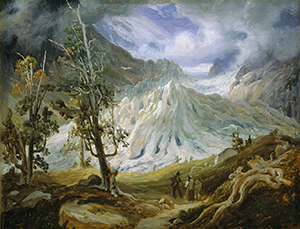
Thomas Fearnley, Grindelwald Glacier (1, sketch), c. 1837 |
STRAUSS AND BEETHOVEN SATURDAY, JULY 19, 2025 . 8:00 pm Mercury Orchestra LUDWIG VAN BEETHOVEN Piano Concerto No. 4 in G Major, Op. 58 The Mercury Orchestra, national winner of the 2010 American Prize in Orchestral Performance, plays the monumental Alpine Symphony, a masterful tone poem by Richard Strauss depicting an eleven-hour (from daybreak just before dawn to nightfall) climb of an Alpine mountain, comprising sunrise, forest, waterfall, glacier, summit, storm, and sunset. Beethoven's supremely lyrical fourth piano concerto provides a more intimate dialogue between pianist and orchestra. Music Director Channing Yu conducts and is the featured piano soloist. |
||||
Kazimir Malevich, Morning in the Village after Snowstorm, 1912 |
RACHMANINOFF & PROKOFIEV SATURDAY, AUGUST 24, 2024 . 7:30 pm Mercury Orchestra The Mercury Orchestra, national winner of the 2010 American Prize in Orchestral Performance, contrasts two powerful masterpieces. Rachmaninoff’s beloved Third Piano Concerto is a remarkable Romantic era synthesis of musical elements in one of the most technically demanding piano concertos ever written. Prokofiev intended his magnificent Fifth Symphony as “a hymn to free and happy Man, to his mighty powers, his pure and noble spirit.” |
||||
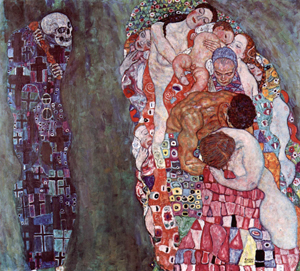
Gustav Klimt, Tod und Leben (Death and Life), 1910-1915 |
BRAHMS & BRUCKNER SATURDAY, JULY 20, 2024 . 8:00 pm Mercury Orchestra The Mercury Orchestra, national winner of the 2010 American Prize in Orchestral Performance, celebrates the 200th anniversary of Austrian composer Anton Bruckner (1824-1896) with a performance of one of his best-known symphonies, the Symphony No. 7, which demonstrates the remarkable craftsmanship of the composer as well as the considerable influence of his fellow composer Richard Wagner. Several achingly sincere themes are transformed using unique harmonic progressions and powerful instrumentation choices to a work of magnificent beauty. A “rival” approach to beauty in music is presented with the Schicksalslied (Song of Destiny) of German composer Johannes Brahms (1833-1897). The work is a choral setting of a poem written by Friedrich Hölderlin and accompanied by orchestra, and it is arguably a representative of Brahms’s finest choral writing. |
||||
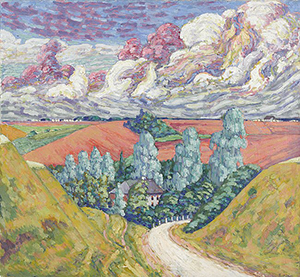
Konrad Mägi, Teel Viljandist Tartusse (On the Road from Viljandi to Tartu), 1915-16 |
MÄGI, TCHAIKOVSKY, & RACHMANINOFF SATURDAY, AUGUST 26, 2023 . 7:30 pm Mercury Orchestra The Mercury Orchestra presents a concert of vividly colorful and expressive masterpieces. Ester Mägi, dubbed the “First Lady” of Estonian music, evokes the distant past in the spare beauty of her work entitled Bucolic. Piotr Tchaikovsky’s immediately recognizable first piano concerto will be presented in its rarely performed Second Edition, the last version containing Tchaikovsky's revisions—the commonly heard Third Edition was revised by others and published after his death. Rachmaninoff’s Third Symphony combines plaintive melodies with vigorous dance rhythms and was the composer's favorite of his symphonies. The concert will feature pianist Che Li, winner of the 2023 Fou Ts’ong International Concerto Competition, sponsored by the Foundation for Chinese Performing Arts. |
||||
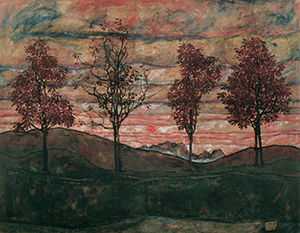
Egon Schiele, Vier Bäume (Four Trees), 1917 |
MAHLER SATURDAY, JULY 15, 2023. 8:00 pm Mercury Orchestra MAHLER Symphony No. 9 The Mercury Orchestra presents Gustav Mahler’s Ninth Symphony, the last score he completed. It is perhaps a crucible of life and death, youth and love, the colossal and the intimate, the sublime and the grotesque, and grief and peace. |
||||
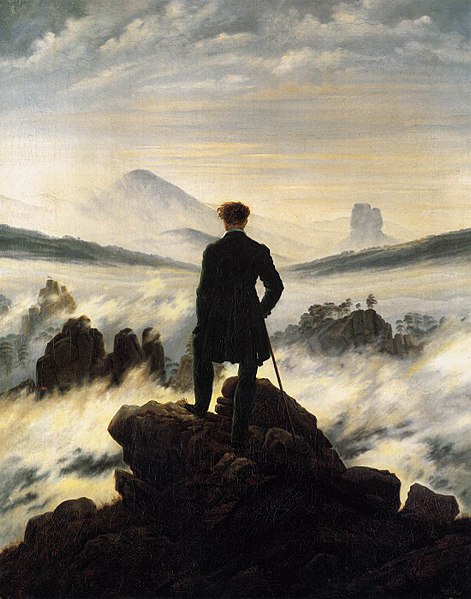
Caspar David Friedrich, Der Wanderer über dem Nebelmeer (The Wanderer above the Mists), c.1818 |
BEETHOVEN SATURDAY, AUGUST 27, 2022 . 7:30 pm Mercury Orchestra BEETHOVEN Overture to Coriolan The Mercury Orchestra presents an odyssey of the individual against the forces of fate, through the revolutionary music of Ludwig van Beethoven. Written for Heinrich Joseph von Collin's 1804 tragedy Coriolan, the Coriolan Overture juxtaposes the stirrings of war with a mother's pleas for peace. The fifth piano concerto, dedicated to Beethoven's patron, the Archduke Rudolf, epitomizes Beethoven's middle or heroic period, defining a new relationship between soloist and orchestra. The Fifth Symphony, universally known for its opening "fate-motif", is not only a towering edifice but also an intimately sublime portrait of individual struggle. Piano soloist Nan Ni is the First Prize winner of the first Fou Ts’ong International Piano Competition (2022) sponsored by the Foundation for Chinese Performing Arts. |
||||
Christopher R. W. Nevinson, A Front Line near St. Quentin, 1918 |
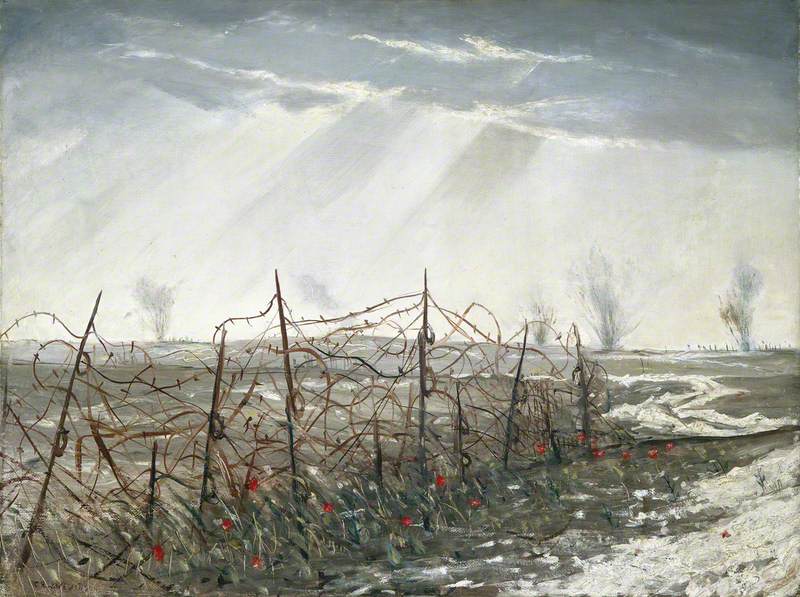
RALPH VAUGHAN WILLIAMS SATURDAY, JULY 16, 2022 . 8:00 pm Mercury Orchestra The Mercury Orchestra, national winner of the 2010 American Prize in Orchestral Performance, returns to the concert stage for a live, in-person performance, featuring two symphonies of Ralph Vaughan Williams written between the first two world wars. The Fourth Symphony is an anguished and conflicted unfolding of powerfully layered ideas brought to life through the full dynamic spectrum of the symphony orchestra. The Fifth Symphony draws forth plaintive meditations and sauntering explorations in Vaughan Williams’ distinctively beautiful modal-lyrical style. 2022 marks the 150th anniversary of the birth of Ralph Vaughan Williams. |
||||
Léon Carré, illustration from Le livre des mille nuits et une nuit, 1926–1932 |
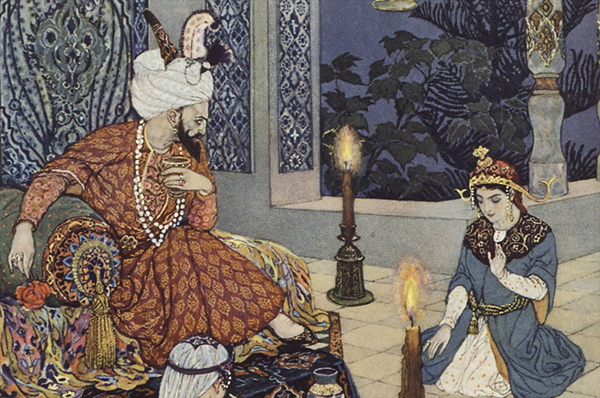
BEETHOVEN & RIMSKY-KORSAKOV WEDNESDAY, AUGUST 18, 2021 . 7:00 pm
The Mercury Orchestra returns to the stage with a FREE concert at DCR’s Hatch Memorial Shell on the Charles River Esplanade in partnership with our colleagues from the Longwood Symphony Orchestra. Hatch Memorial Shell on the Esplanade |
||||
|
ALL-BRAHMS SATURDAY, AUGUST 24, 2019 . 7:30 pm Johannes Brahms Channing Yu, conductor The Mercury Orchestra delves into the multilayered musical threads of Johannes Brahms. The hefty storm and sweep of his Piano Concerto No. 1 contrasts with the mellifluous lyricism of his Symphony No. 2. This performance will feature Zhiye Lin, the winner of the Foundation for Chinese Performing Arts's First Annual International Concerto Competition. Jordan Hall, New England Conservatory |
||||
Daniel MacDonald, A Wedding Dance (c.1848) |
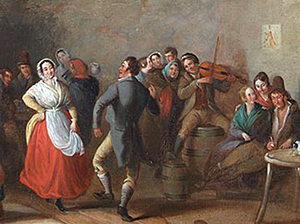
STANFORD & BEACH WEDNESDAY, AUGUST 7, 2019 . 7:00 pm Sir Charles Villiers Stanford Amy Beach Channing Yu, conductor The Mercury Orchestra, national winner of the American Prize for Orchestral Performance, performs a concert exploration of Irish story and song. Phaudhrig Crohoore, a popular ballad by the Irish novelist J. Sheridan Le Fanu set to music by the Irish composer Sir Charles Villiers Stanford, tells the tale of a bold, roughhewn Irishman with a heart of gold, against a backdrop of family feuding and romance. American composer Amy Beach decidedly chose simple old Irish melodies as the building blocks to build a masterful symphonic work, her “Gaelic” Symphony, which was premiered in Boston in 1898.
The New World Chorale joins the orchestra. Families are especially welcome to this concert. This performance is hosted by the Boston Landmarks Orchestra. The concert will end at approximately 8:40 pm. |
||||
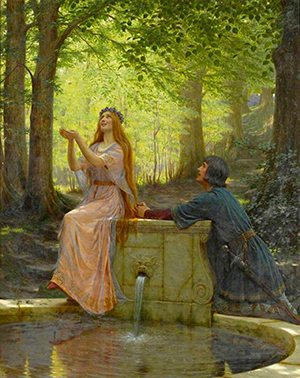
Edmund Blair Leighton, Pelleas and Melisande (1910) |
DEBUSSY, STRAVINSKY, & SCRIABIN SATURDAY, JULY 13, 2019 . 8:00 pm Claude Debussy (arr. Alain Altinoglu) Mercury Orchestra opens its twelfth season with an exhilarating concert built on the dramatic tension between life and death, made vivid by the colorful extended harmonies of late Romanticism, including a suite from Debussy&rsquuo;s opera Pelléas et Mélisande, Stravinsky’s Funeral Song (an early work which was only discovered several years ago), and Scriabin’s magnificent Poem of Ecstasy. Sanders Theatre, Memorial Hall, Harvard University |
||||
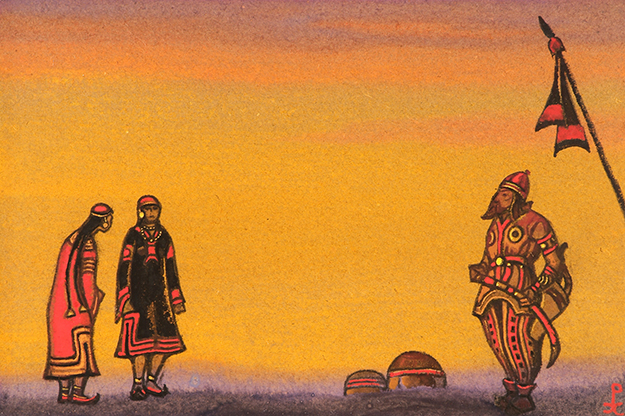
Nicholas Roerich, Polovtsians (Polovtsian and Maidens) (1943). Costume design for Polovtsian Dances (from Borodin’s opera Prince Igor). |
SHOSTAKOVICH, BORODIN, & TCHAIKOVSKY WEDNESDAY, AUGUST 29, 2018 . 7:00 pm Dmitri Shostakovich Alexander Borodin Piotr Ilyich Tchaikovsky Channing Yu, conductor The Mercury Orchestra, national winner of the American Prize for Orchestral Performance, performs an outdoor concert featuring some of the most colorful music of Russian composers, including the vigorous processionals of Shostakovich’s Festive Overture, the pining folk songs and infectious rhythms in Borodin’s Polovtsian Dances, and the poignant novelic storytelling of Tchaikovsky’s Fifth Symphony. The orchestra is joined by the New World Chorale. Families are especially welcome to this concert. This performance is hosted by the Boston Landmarks Orchestra. The concert will end at approximately 8:50 pm. |
||||
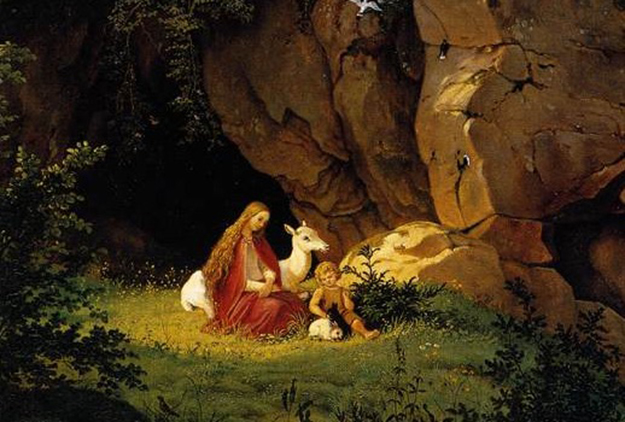
Adrian Ludwig Richter, Genoveva in der Waldeinsamkeit (Genvieve in the Forest Seclusion) (1841) |
SCHUMANN SATURDAY, AUGUST 11, 2018 . 8:00 pm Robert Schumann Channing Yu, conductor Mercury Orchestra presents an all-Schumann program which includes the overture from his only opera, his colorful and lyrical piano concerto, and his daring and turubulent Second Symphony. This performance will feature Zengyue Fan, winner of the 2018 Foundation for Chinese Performing Arts Concerto Competition. Sanders Theatre, Memorial Hall, Harvard University |
||||
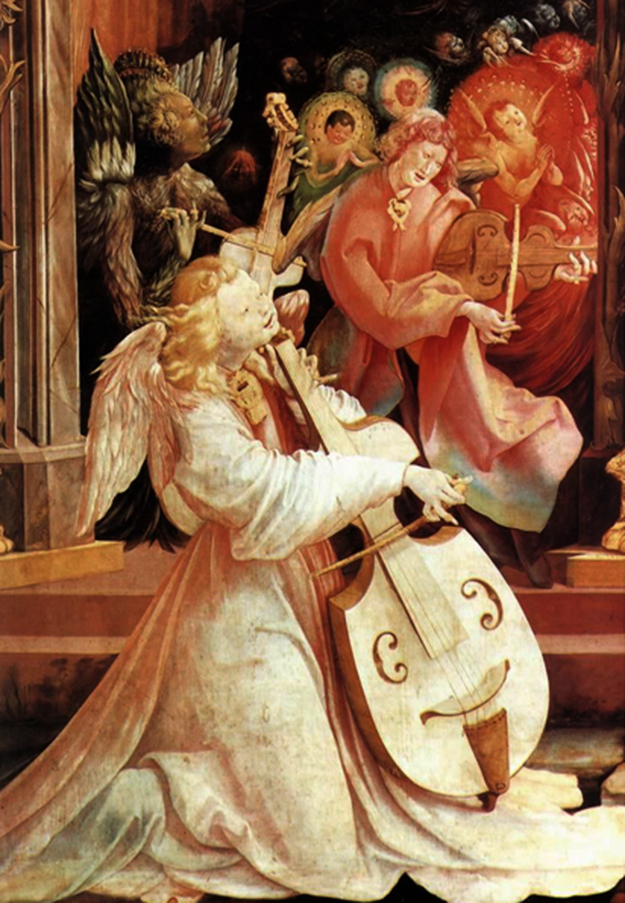
Matthias Grünewald,Engelkonzert (Angels’ Concert) (1516) |
BERNSTEIN AND HINDEMITH SATURDAY, JULY 14, 2018 . 8:00 pm Leonard Bernstein Paul Hindemith Channing Yu, conductor With the collaboration of the American mezzo-soprano Vera Savage, the Mercury Orchestra commemorates the centenary of Leonard Bernstein’s birth with the dramatic, heartbreaking lamentations of his first symphony, a work which was triumphantly received around the world on its premiere. The orchestra also explores the role of the artist in society in Paul Hindemith’s evocative musical tableau inspired by the Isenheim Alterpiece of the master painter Matthias Grünewald. Sanders Theatre, Memorial Hall, Harvard University |
||||
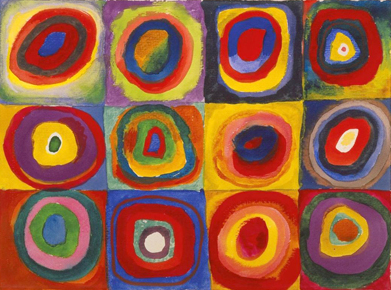
Wassily Kandinsky, Color Study: Squares with Concentric Circles (1913) |
RACHMANINOFF SATURDAY, AUGUST 12, 2017 . 8:00 pm Sergei Rachmaninoff Sergei Rachmaninoff Channing Yu, conductor The Mercury Orchestra, national winner of the American Prize in Orchestral Performance, performs an all-Rachmaninoff program. Seventeen-year-old Yuhang Li, winner of the 2017 Foundation for Chinese Performing Arts Piano Competition, tackles the brilliant, ominous, and poignant variations in the Rhapsody on a Theme of Paganini. The orchestra unpeels the rich, mulitudinous layers of the monumental Second Symphony. |
||||
Liebig company color lithograph card collection, Maîtres Chanteurs (ca. 1882) |
WAGNER AND STRAUSS WEDNESDAY, JULY 26, 2017 . 7:00 pm Richard Wagner (arr. Henk de Vlieger) Richard Strauss The Mercury Orchestra performs an outdoor concert of symphonic opera—opera without voices—featuring two of the most opulent and songful scores among the romantic opera literature. Wagner’s Die Meistersinger von Nürnberg (The Mastersingers of Nuremberg) illustrates how a newcomer to a small village of great singing traditions can bring new life and change to enhance old ways. Richard Strauss’s Suite from Der Rosenkavalier (The Knight of the Rose) explores the many facets of love, loss, and change in the colorful grandeur of mid-eighteenth-century Vienna. Families are welcome to this concert. Hosted by the Boston Landmarks Orchestra. The concert will end at approximately 8:45 pm. Hatch Memorial Shell on the Esplanade |
||||
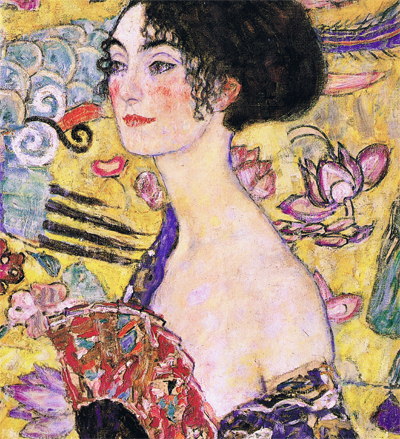
Gustav Klimt, Lady with Fan (1918) |
BERG AND STRAUSS SATURDAY, JULY 15, 2017 . 8:00 pm Alban Berg Richard Strauss Richard Strauss Channing Yu, conductor Sanders Theatre, Memorial Hall, Harvard University |
||||
Akseli Gallen-Kallela, Skaters near the shore of Kalela (1896) |
RIMSKY-KORSAKOV, FRIDAY, AUGUST 12, 2016 . 8:00 pm Nikolai Rimsky-Korsakov Edvard Hagerup Grieg Jean Sibelius Channing Yu, conductor The Mercury Orchestra evokes the choral traditions of Northern Europe in a program including Rimsky-Korsakov’s brilliant orchestration of Russian Orthodox liturgical themes in his Russian Easter Overture, Edvard Grieg’s deft weaving of Norwegian folk themes into his Piano Concerto, and Jean Sibelius’s triumphant storytelling in his Second Symphony—his self-proclaimed “confession of the soul.” This performance features pianist Raymond Feng, winner of the 2016 Foundation for Chinese Performing Arts Concerto Competition. Sanders Theatre, Memorial Hall, Harvard University |
||||
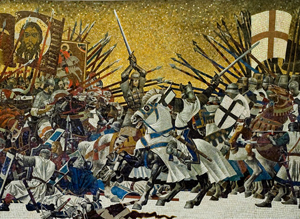
A. K. Bystrov, Alexander Nevsky, mosaic in Alexander Nevsky Metro Station, St. Petersburg (1990) |
PROKOFIEV AND SHOSTAKOVICH SATURDAY, JULY 16, 2016 . 8:00 pm Sergei Prokofiev Dmitri Shostakovich Channing Yu, conductor The Mercury Orchestra, national winner of the American Prize for Orchestral Performance, performs two strikingly contrasting pictures of Russian leaders. Prokofiev’s score for the film Alexander Nevsky spectacularly illustrated the victories of the eponymous great Russian medieval folk hero. Shostakovich’s Tenth Symphony, presented after his second denunciation by the government, is a masterful extension of the symphonic form which encodes references to Stalin and the years of his rule. Sanders Theatre, Memorial Hall, Harvard University |
||||
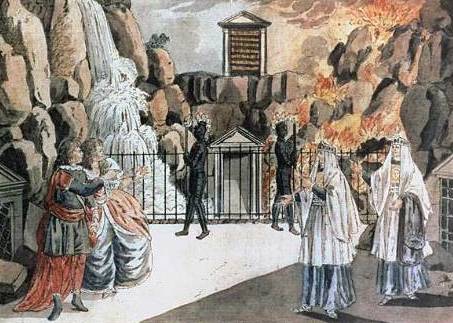
J & P Schaffer, Set design for Die Zauberflöte (late 18th century) |
MOZART, BEETHOVEN, & BRAHMS SATURDAY, AUGUST 15, 2015 . 8:00 pm Wolfgang Amadè Mozart Ludwig van Beethoven Johannes Brahms Howard Tin Pui Tang, piano The Mercury Orchestra, national winner of the
American Prize for Orchestral Performance,
performs three striking works by giants of the
classical music canon. Don’t miss the opportunity
to be surprised once more by the melodic
twists and harmonic turns in these hallmarks of
each master’s style. This performance features
19-year-old pianist Howard Tin Pui Tang, winner
of the 2015 Foundation for Chinese Performing Arts Concerto Competition. |
||||
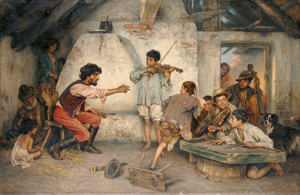
János Valentiny, Cigányiskola (1896) |
BARTÓK AND RÓZSA SATURDAY, JULY 18, 2015 . 8:00 pm Miklós Rózsa Béla Bartók The Mercury Orchestra explores works from two very different 20th century Hungarian composers who emigrated to America. Béla Bartók, an avid collector of regional folk songs, was a master creator of sublime and beautiful works for the concert hall and stage. Miklós Rózsa, known principally for his musical scores for classical Hollywood films—including Ben-Hur, Spellbound, and Quo Vadis—has been underappreciated as a serious composer of concert pieces, and the Mercury Orchestra presents three contrasting works of his. Sanders Theatre, Harvard University |
||||
Ilya Repin, Portrait of Leo Tolstoy as a Ploughman on a Field (1887) |
PROKOFIEV, SAINT-SAËNS, SATURDAY, AUGUST 16, 2014 . 8:00 pm Sergei Prokofiev Camille Saint-Saëns Piotr Tchaikovsky Victor Xie, piano Prokofiev’s evanescent neoclassical turns, Saint-Saëns’ romantic era evocations of the baroque, and Tchaikovsky’s emotional, metaphysical exploration of the end of life are next stops on the nationally acclaimed Mercury Orchestra’s journey through musical time. This performance features 16-year-old pianist Victor Xie, winner of the 2014 Foundation for Chinese Performing Arts Concerto Competition. Sanders Theatre, Harvard University |
||||
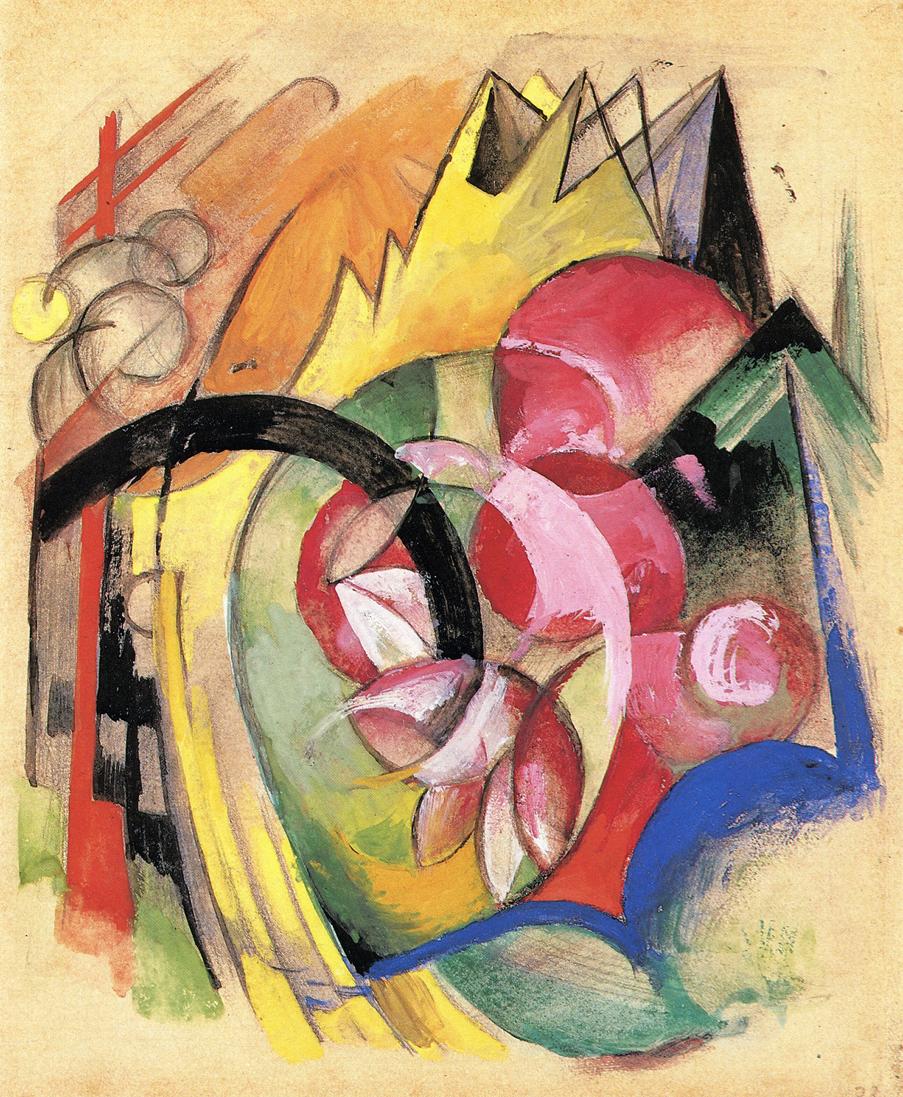
Franz Marc, Colorful Flowers (Abstract Forms) (c. 1914) |
MAHLER SATURDAY, JULY 19, 2014 . 8:00 pm Gustav Mahler Gustav Mahler’s vision of the symphony entailed “creating a world with all the technical means available.” The Mercury Orchestra joins forces with the Mercury Orchestra Chorale and the internationally acclaimed voices of Anne Harley and Sarah Rose Taylor to present Mahler’s intensely lyrical and spiritual statement in a single performance. Sanders Theatre, Harvard University |
||||
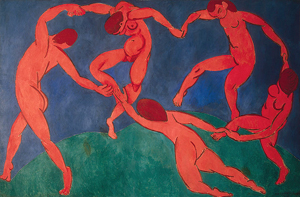
Henri Matisse, La danse (second version) (1909-1910) |
STRAVINSKY AND RACHMANINOFF SATURDAY, JULY 20, 2013 . 8:00 pm Igor Stravinsky Le sacre du printemps (The Rite of Spring) The Mercury Orchestra commemorates the 100th anniversary of the wild, chaotic premiere of Stravinsky’s Rite of Spring, with its relentless irregular driving rhythms, sharp harmonic ambiguities, and magnificent power. Rachmaninoff’s Symphonic Dances, his final composition, fuses a similarly adamant kineticism with intensive, poignant, and beautiful lyricism. Sanders Theatre, Harvard University |
||||
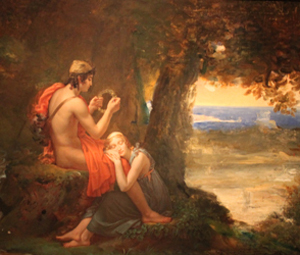
François Pascal Simon Gérard, Daphnis et Chloé (1824) |
RAVEL SATURDAY, AUGUST 18, 2012 . 8:00 pm Ravel Le tombeau de Couperin The Mercury Orchestra celebrates the 100th anniversary of the premiere of Ravel’s magnificent ballet Daphnis et Chloé, a tableau of dazzling orchestral colors depicting the passionate love between the goatherd Daphnis and shepherdess Chloé. The orchestra will present the seldom performed complete ballet version of this work in concert. Le tombeau de Couperin is Ravel’s delightful homage to the graceful beauty of the baroque French Suite form. Sanders Theatre, Harvard University |
||||
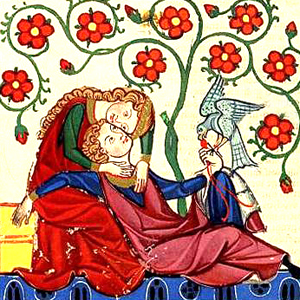
The minnesinger Konrad von Altstetten in the arms of his lady-love and feeding a falcon. Early 14th century Heidelberg Lieder manuscript. |
WAGNER, BARTÓK, & BRAHMS SATURDAY, JULY 21, 2012 . 8:00 pm Wagner Overture to Tannhäuser Members of the Seraphim Singers Romanticism struggles against anti-romanticism in the Mercury Orchestra’s next concert of contrasts, from Richard Wagner’s tale of a man’s struggle against his basest desires to attain spiritual redemption, to Béla Bartók’s grotesque, violent story of the supernatural powers of love in the face of malevolence, to Johannes Brahms’s triumphal entrance into the symphonic form. Don’t miss this opportunity to hear The Miraculous Mandarin performed in concert in its uncensored and restored entirety, instead of the more commonly performed abridged Suite. Sanders Theatre, Harvard University |
||||
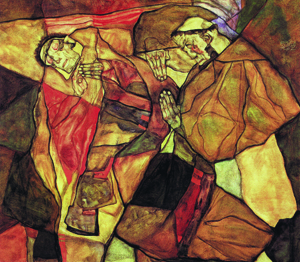
Egon Schiele, Agonie (Der Todeskampf) / Agony (The Death Struggle) (1912) |
MAHLER SATURDAY, JULY 23, 2011 . 8:00 pm Mahler Symphony No. 6 The Mercury Orchestra presents Gustav Mahler’s Symphony No. 6 in A minor (“Tragic”), a relentlessly tempestuous yet poignantly beautiful orchestral tour de force. Sanders Theatre, Harvard University Note: This performance has already taken place. Read lreabout the composer and piece |
||||
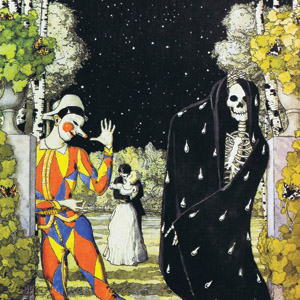
Konstantin Somov, Harlequin and Death (1907) |
STRAVINSKY AND BERLIOZ SATURDAY, JULY 17, 2010 . 8:00 pm Stravinsky Petrushka (1911) The Mercury Orchestra presents two highly colorful and evocative showpieces for symphony orchestra: Igor Stravinsky’s Petrushka and Hector Berlioz’s Symphonie fantastique. Stravinsky’s score for the ballet Petrushka, commissioned by Sergei Diaghilev for the Ballets Russes, uses a tapestry of Russian folk tunes to conjure the brilliant sights and sounds of a local carnival where puppets seem to possess real lives of their own. Hector Berlioz’s Symphonie fantastique, subtitled “An Episode in the Life of an Artist,” has held audiences under its spell for almost two hundred years, with its vivid exploration of a young man’s obsessive dreams and hallucinations of his beloved. Renowned as one of the cornerstones of Romantic music, the work utilizes the full resources of the symphony orchestra to create a gripping narrative of love, loss, and the macabre. Sanders Theatre, Harvard University Note: This performance has already taken place. |
||||
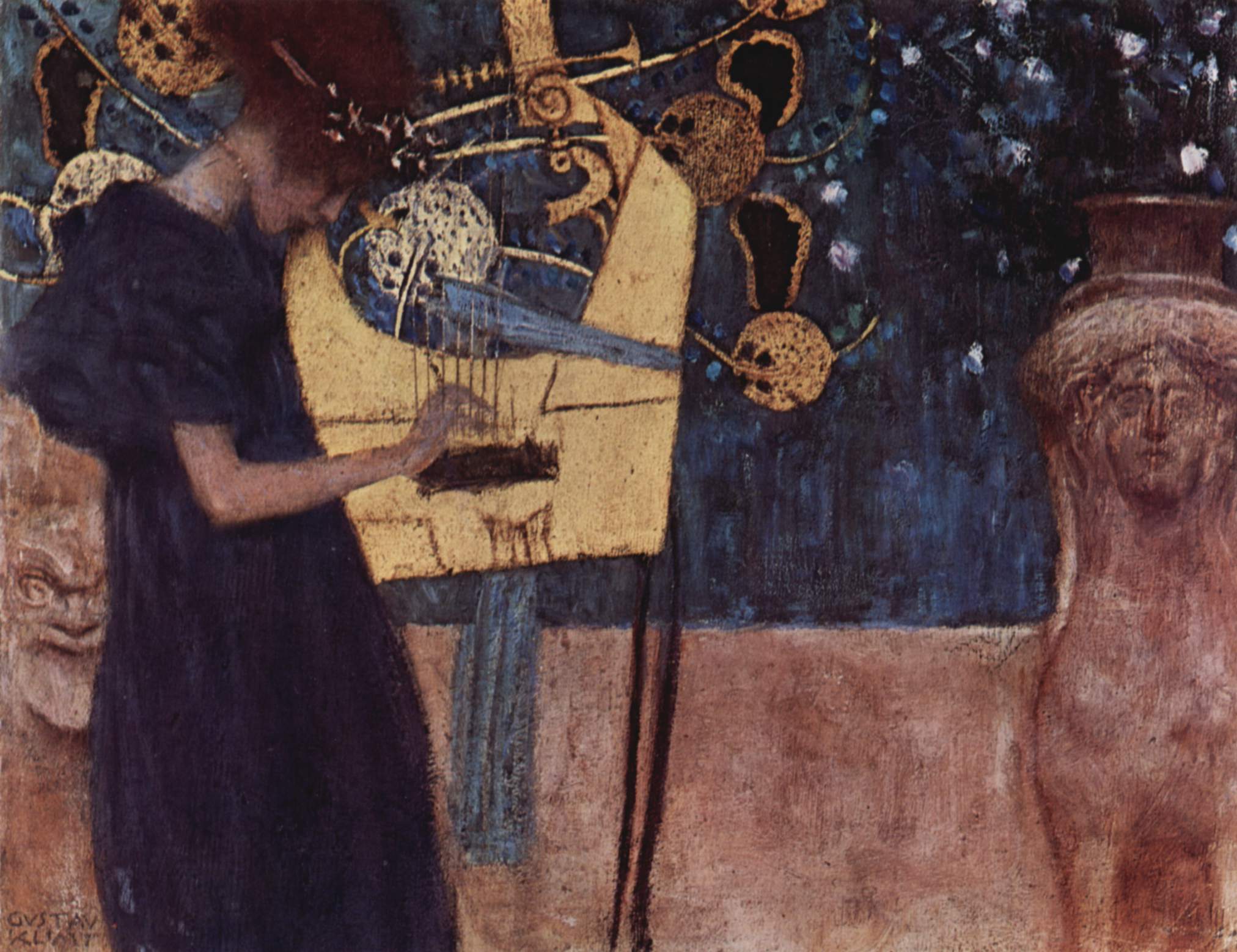
Gustav Klimt, Die Musik (1895) |
MAHLER AND STRAUSS SATURDAY, JULY 18, 2009 . 8:00 pm R. Strauss Don Juan The Mercury Orchestra presents two of the most beautiful and exhilarating works of the Romantic era: Gustav Mahler’s Fifth Symphony and Richard Strauss’s Don Juan. Where his previous symphonies were strongly tied to words of songs, Gustav Mahler sought to break away from a “program” with his Fifth Symphony, preferring to let the music speak for itself. The resulting work is powerful, poignant, brilliant, and immediate, and it is considered by many to represent Mahler’s finest orchestration. With the exception of the well-known, exquisitely tender Adagietto movement, which is scored for harp and strings, Mahler uses a large orchestra to deliver boldness, anguish, passion, and intimacy in this masterwork. Richard Strauss’s tone poem Don Juan is a virtuosic tour-de-force for orchestra, which evocatively illustrates Don Juan’s incessant quest for new passion. These two contrasting dramatic works have thrilled both new and seasoned concertgoers for over 100 years; the Mercury Orchestra invites you to experience them both in an exciting live performance. Sanders Theatre, Harvard University Note: This performance has already taken place. Read about composers and pieces |
||||
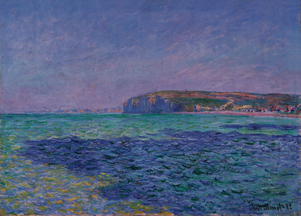
Claude Monet, Shadows on the Sea (1882) |
RAVEL AND DEBUSSY SATURDAY, JULY 19, 2008 . 8:00 pm Ravel La valse (The Waltz) Albert Kim, piano The Mercury Orchestra, established in 2008, opens its first concert with a colorful program of French impressionist music for symphony orchestra. Maurice Ravel’s witty, nostalgic, lyrical, and sometimes macabre deconstruction of the classical Viennese waltz (La valse) offers a sharp contrast to his sprightly and sublime Piano Concerto in G Major. Claude Debussy’s symphonic portrait La mer evokes three distinct personalities of the sea: De l'aube à midi sur la mer (From dawn until noon on the sea); Jeux de vagues (Play of the waves); Dialogue du vent et de la mer (Dialogue of wind and sea). Sanders Theatre, Harvard University Note: This performance has already taken place. |
P O BOX 425082 . CAMBRIDGE, MA 02142 . info@mercuryorchestra.org |
Site ©
by Mercury Orchestra. All rights reserved. |
.jpg)